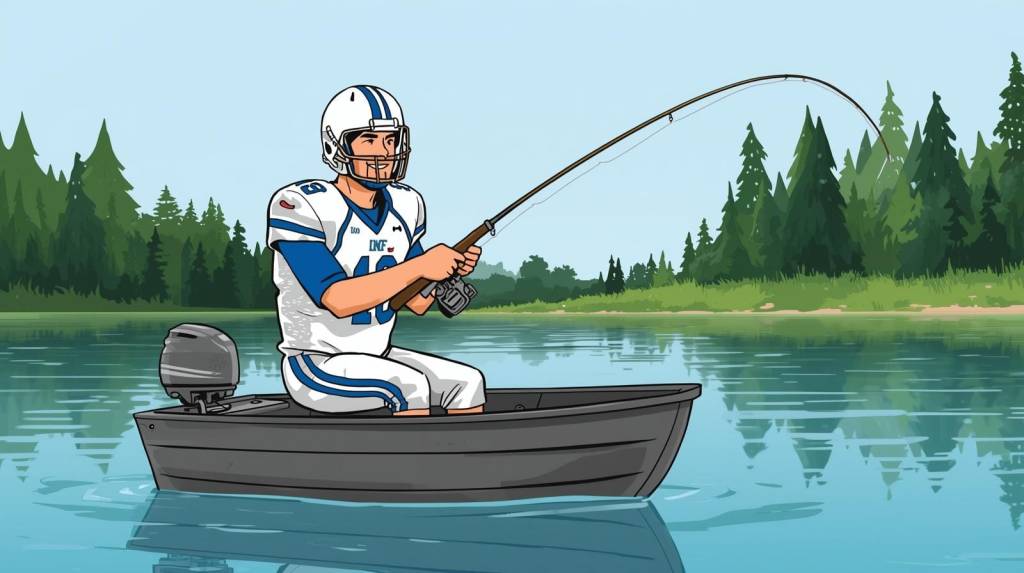
It’s been an interesting season for the Indianapolis Colts in many ways. The explosion of Jonathan Taylor. The acquisition of Sauce Gardner. And the quarterbacks. Oh, it’s been an interesting year for quarterbacks in Indy. Three different field generals stepped onto the gridiron for Colts at some point during the first 14 weeks…
- Anthony Richardson, the lackluster (to say the least) 4th overall pick of the 2023 draft has thrown 1-9-0 (completions-yards-touchdowns) and has been recovering from a fractured orbital bone sustained during warm-ups before their game against the Cardinals.
- Riley Leonard, a more modest 6th-rounder in 2025 has gone 18-145-0 and is fighting a strained PCL.
- And, Daniel Jones, their blockbuster acquisition of this past off-season went 261-3101-19 before a devastating torn Achilles tendon ended his current campaign and calls his availability for next season into question.
With the trade deadline well in the rearview mirror at this point, what was left for the Colts to do? Scour the waiver wire? Bring on a UFL quarterback? No…no, no. They found a Colts alumnus who decided he had something left in the tank.
Philip Rivers forfeited his HOF semifinalist status to come back to the Colts and help them close out their season. At 44, he’s now the oldest active player in the league (unseating 42-year-old Aaron Rodgers from that throne), and is a grandfather. And how did he fare? Not…bad. Certainly capable for someone who had less than a week to practice with the team. He went 18-118-1 with an interception and a 73.1 passer rating. For you fantasy nerds, he fell between QB27-29 for week 15 (ymmv based on league scoring systems). He looked like someone who’d only been with the team for a few days.
I went back and watched his 27 passing attempts on the all-22 video footage (NFL+ Premium really is a fun toy). Of 27 passes, there are only three I saw and thought, “eh, there was a better option”:
- Michael Pittman was wide open on a crossing route moving right to left (interesting enough, the TD to Joshua Downs later was a similar route).
- There was one play where Downs was wide open in the left flat.
- On the interception, Alec Pierce was open on a go route down the right sideline.
It seems the field vision, the instinct is still there. This felt like someone who is still developing rapport with his receivers. So, the question will be what does his second week look like after a full week of practice. The 49ers come to town for prime time on Monday night. Quarterbacks have been scoring 0.2 points over their projections against the San Francisco defense this season. So, not an overly favorable matchup. (Father) Time will tell…